
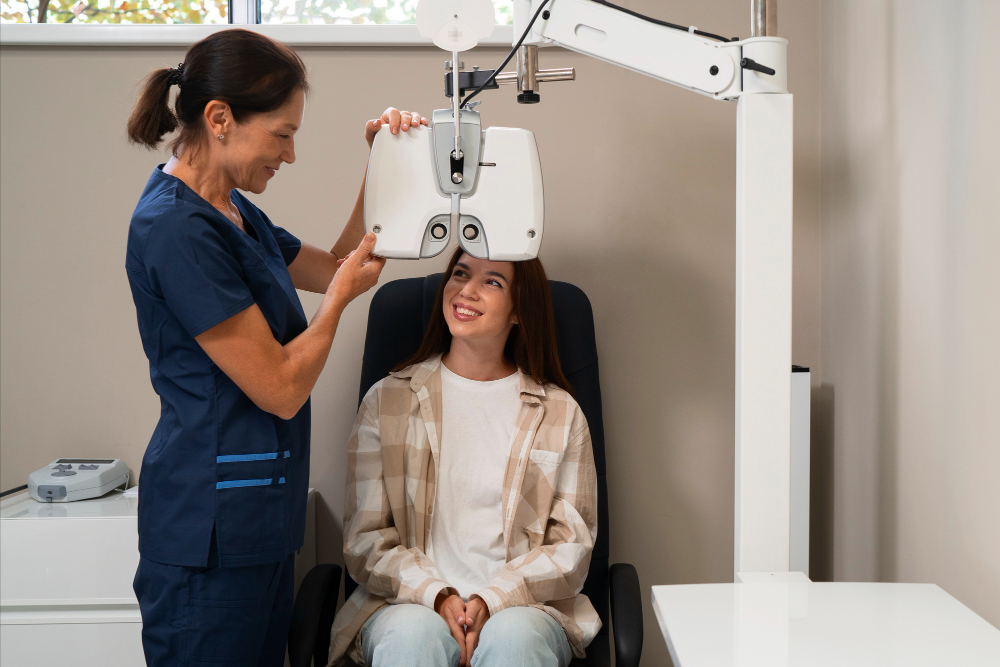
What Are Regular Eye Exams?
Regular eye exams are check-ups for your eyes. During these visits, an eye doctor checks your vision and looks for any problems. For many people, these exams happen once a year or every two years. However, your doctor may suggest a different schedule based on your needs. Regular eye exams help keep your vision clear and your eyes healthy.
Why Are Regular Eye Exams Important?
First, regular eye exams can catch problems early. Many eye diseases do not show symptoms at first. For example, glaucoma and diabetic eye disease can develop slowly. However, an eye doctor can spot these issues before they get worse. Because of this, regular eye exams protect your vision and help prevent serious problems. In addition, these exams can find other health issues, such as diabetes or high blood pressure, by looking at the blood vessels in your eyes.
Common Symptoms and Early Warning Signs Detected by Eye Exams
Sometimes, you may not notice changes in your vision. Still, regular eye exams can find early warning signs, such as:
Because these symptoms can signal serious problems, it is important to get checked even if you feel fine.
How Regular Eye Exams Help in Early Diagnosis and Prevention
Early detection of eye diseases is key to saving your sight. For instance, the World Health Organization notes that up to 80% of vision loss is preventable or treatable. Regular eye exams help spot issues like cataracts, glaucoma, and age-related macular degeneration early. As a result, treatment can start sooner, which often leads to better outcomes. In addition, eye exams can reveal signs of other health problems, so you can get the care you need right away.
What to Expect During a Routine Eye Exam
During a regular eye exam, your doctor will:
Sometimes, your doctor may use drops to widen your pupils. This helps them see the back of your eyes more clearly. The exam is quick and usually painless.
How Often Should You Get Your Eyes Checked?
How often should you get an eye exam? The answer depends on your age, health, and risk factors. Here are general guidelines:
Because everyone is different, your eye doctor may suggest a schedule that fits your needs.
Tips for Maintaining Eye Health Between Exams
Besides regular eye exams, you can protect your eyes every day. Try these eye health tips:
By following these tips, you can help keep your eyes healthy between exams.
Conclusion
In summary, regular eye exams are vital for protecting your vision and overall health. They help detect eye diseases and other health problems early, often before symptoms appear. Because your eyes play such an important role in your daily life, do not wait for discomfort or vision changes to seek help.
Consult an eye care specialist like Dr. Sudha for personalised advice and comprehensive eye examination.