
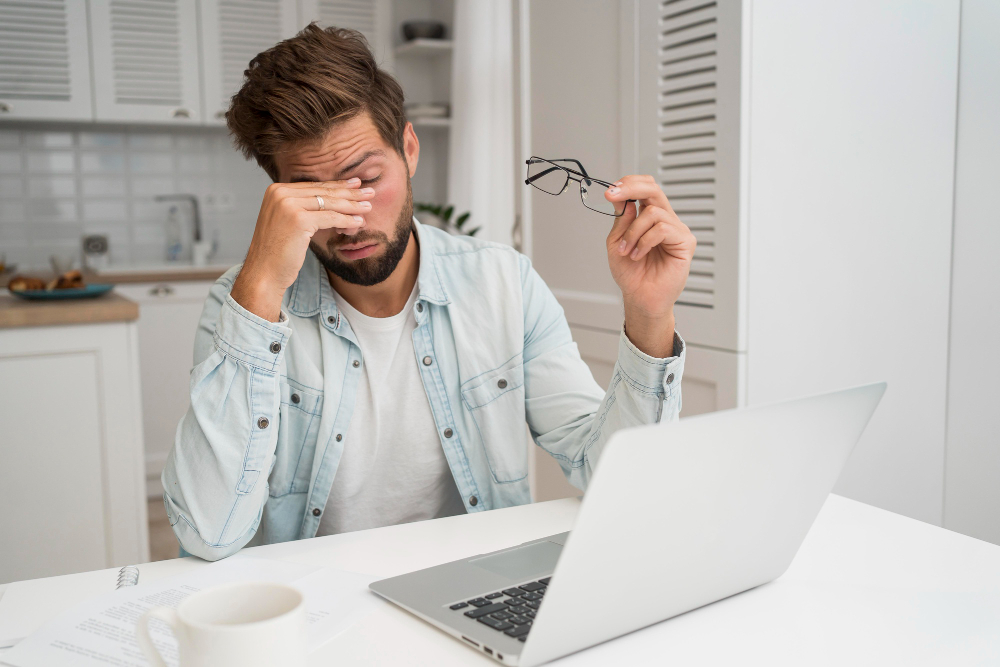
What is Digital Eye Strain?
Digital eye strain, also called computer vision syndrome, is a group of eye and vision problems. These issues happen after long use of digital screens. For example, computers, tablets, and smartphones can all cause eye fatigue from screens. As more people use digital devices daily, digital eye strain is becoming more common. According to the American Optometric Association, many people feel discomfort after just two hours of screen time.
Symptoms of Digital Eye Strain
Many people notice symptoms after using screens for a while. However, symptoms can vary from person to person. Common signs include:
Sometimes, these symptoms go away after resting your eyes. But if they last, you may need to take action.
Causes of Digital Eye Strain
There are several reasons why digital devices can cause eye strain. For instance, people tend to blink less when looking at screens. This leads to dry eyes. Also, glare from screens and poor lighting can make things worse. Other causes include:
In addition, working in air-conditioned or heated rooms can dry out your eyes even more.
Diagnosis
If you have symptoms of digital eye strain, an eye doctor can help. First, they will ask about your screen habits and symptoms. Then, they may check your vision and eye health. Sometimes, special tests are needed to see how your eyes focus and move. Early diagnosis can help prevent long-term problems.
Treatment Options
There are many ways to treat digital eye strain. Your doctor may suggest:
Sometimes, treating underlying vision issues can also help reduce eye fatigue from screens.
Prevention Tips
Luckily, you can take steps to reduce eye strain from digital devices. Try these tips:
For those in dry or air-conditioned places, using a humidifier can help keep your eyes comfortable.
Lifestyle Guidance for Eye Comfort
Besides screen habits, your daily routine matters. For example, eating foods rich in vitamin A and omega-3 fatty acids supports eye health. Also, staying hydrated helps prevent dry eyes. If you wear contact lenses, follow your eye doctor’s advice for safe use. In addition, regular eye check-ups can catch problems early.
When to See an Eye Specialist
If your symptoms don’t improve with home remedies or rest, it’s important to see an eye specialist. Seek professional help if you experience:
Early diagnosis and treatment can prevent more serious complications. Your eyes are essential for daily life, so don’t ignore discomfort or strain.
If you’re experiencing ongoing eye fatigue or irritation, consult Dr. Sudha for a thorough evaluation and personalised guidance on managing Digital Eye Strain effectively.